Happy New Year! Many of us are reflecting on the past and envisioning a better future. Whether it’s adopting a healthier lifestyle, kicking a bad habit, or chasing a long-lost passion, the urge to change is strong in our culture this time of year. But change doesn’t happen overnight. It’s a process, and understanding where we are in a change process can make all the difference for success.
Today, we’ll check out proven strategies on how to approach changes we want to make in a strategic and effective way, so we can reach our goals and make lasting, positive changes in our life.
Let’s dive into how we can navigate change using James Prochaska’s Stages of Change model, a proven framework that can help us achieve our goals and start the New Year on the right foot.
Understanding The Proven Strategies-Stages Of Change
Happy New Year! Many of us are reflecting on the past and envisioning a better future. Whether it’s adopting a healthier lifestyle, kicking a bad habit, or chasing a long-lost passion, the urge to change is strong in our culture this time of year. But change doesn’t happen overnight. It’s a process, and understanding where we are in a change process can make all the difference for success. So, what if we could approach it like pros?
Today, we’ll check out how to approach changes we want to make in a strategic and effective way, so we can reach our goals and make lasting, positive changes in our life.
Let’s dive into how we can navigate change using James Prochaska’s Stages of Change model, a proven framework that can help us achieve our goals and start the New Year on the right foot.
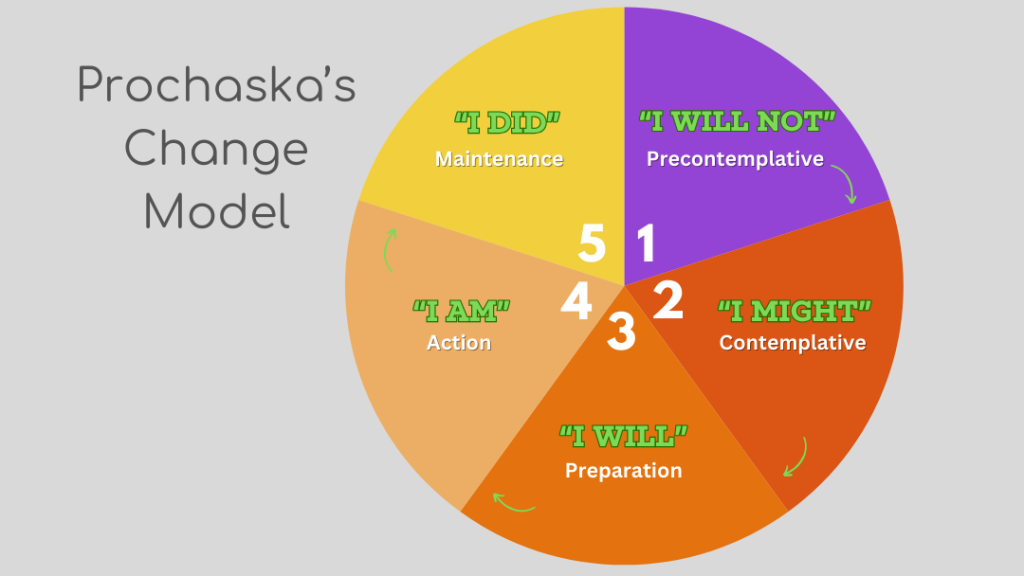
Prochaska’s research has had a major impact on fields like psychology, public health, and addiction treatment. His model provides a framework for understanding and facilitating change. It shows us that changing behaviors require progressing through specific cognitive phases. The key is adjusting our behavior modification focus depending on what stage we are. So let’s break down Prochaska’s Stages of Change, shall we?
1. “I Won’t”
Precontemplation: The Unseen Need For Change
In the precontemplation stage, we’re not quite ready to change. We might not even know we need to change, or we could pretend our behavior doesn’t matter. We might say things like, “I don’t need to exercise” or “Quitting smoking isn’t necessary.” At this stage, the challenge is recognizing the need for change.
2. “I Might”
Contemplation: Weighing The Pros And Cons
In the contemplation stage, we see the writing on the wall – something’s gotta give. We’re aware of the benefits of making a change, but we’re also keenly aware of the effort it’ll take. So we weigh the pros and cons and think about the future. It’s a stage filled with internal debates like, “Is it worth it?” and “Can I really do this?”
3. “I Will”
Preparation: Getting Ready To Make a Change
Preparation is where we move from thinking to planning. This is the packing stage for our change trip where we lay the groundwork for the desired change. We gather resources, research to get knowledge, strategically set goals, and prepare ourselves for the journey ahead. It’s that, “I’m going to start next week,” or “I’ll join that gym tomorrow” mindset. We’re gearing up to take action.
4. “I Am”
Action: Implementing The Change
Now, we’re in the thick of it. We are actually doing the work, changing our choices, and seeing progress. This is where we begin to feel the impact of our efforts. This is where we put in the most effort to make things happen.
WARNING: the risk of relapse is super high at this stage. Despite efforts to choose new actions that promote positive behavior, they have not yet become fully ingrained habits in our minds. To succeed at this stage, it’s crucial to stay mindful, committed, and use grit.
5. “I Did”
Maintenance: Keeping The Change Alive
The maintenance stage is about sticking to the new behavior and not going back so we can make it a habit. The trick is to make the change part of our daily routine until it becomes second nature. It’s crucial to be ready for setbacks and have ways to deal with triggers and temptations. Support systems are super important to help us stay on track.
6. Relapse: Handling Setbacks
Let’s be real. Change isn’t always a smooth, straight line. Sometimes, we slip up. And you know what? That’s okay. Relapse can be part of the process, and it doesn’t mean because we missed the mark, we should give up. What matters is how we respond to it. If we go back to our old ways, we can think about what caused the relapse and make changes then dust ourselves off and keep on trucking.
The Pressure For New Year’s Resolutions
When we make our New Year’s resolutions, it’s easy to get carried away and set big or too many goals at once. But most of us give up on these resolutions in a few weeks. Why? Because we skip the necessary stages or underestimate the challenges ahead. Sometimes we just jump right in without getting ready or we want instant results and then get bummed when they don’t happen quickly.
There are four crucial factors for successful change. These factors are:
1. A deep sense of awareness: What is our specific problem and why do we want to resolve it?
2. A powerful desire: Is your desire strong enough to keep you going through the change?
3. A solid strategy: Will the plan’s design actually lead to long-term success and sustainability?
4. A strong skill set to implement the strategy: The more we strive to strengthen the following skill sets, the more likely we are to have success: self awareness, goal setting, planning and organizing, time management, emotional intelligence, resilience and adaptability, critical thinking and problem solving, communication skills, self discipline, learning and reflection, mindfulness, stress management, and accountability.
These four factors reinforce each other and work in synergy through the change process. We’re constantly reflecting on ourselves, making sure our motivation is still high, our plans are on track, and leveling up our skills when needed to make things happen.
It’s a lot to handle when you feel like you need to change. Every day we risk losing our groove, and the stakes are high—our well-being and satisfaction are at stake. But if we know the Stages of Change, we can be smarter about our resolutions and have a better shot at succeeding.
What To Do In Your Stage For Success
Once we recognize which stage we are in, we can know how to proceed towards success. Understanding the process and adjusting our approach based on our current stage is key. Here are some practical tips for each stage:
For “I WON’T” Precontemplation:
Start small. Take a self inventory of what is working and not working for you in your life. Also, if someone you trust gave you feedback, allow yourself to receive it to jumpstart the contemplation process. Be honest with yourself. Sometimes, just realizing the problem is the first step toward change.
For “I MIGHT” Contemplation:
Make a pros and cons list. Talk to others who have made similar changes. This can help us make a more informed decision and strengthen our resolve.
For “I WILL” Preparation:
Set SMART goals—Specific, Measurable, Achievable, Relevant, and Time-bound. Breaking big goals into smaller, manageable steps can make the process less daunting.
For “I AM” Action:
Stay accountable, track progress, and celebrate those small wins. Recognizing our efforts and keeping that motivation high is crucial. And remember, don’t expect the changes to occur overnight.
For “I DID” Maintenance:
Build a support system, develop strategies for handling triggers and temptations. Staying connected with folks who’ve got our backs makes all the difference.
For Relapse:
Be kind to ourselves. Reflect on what led to the slip and adjust our approach. Remember, relapse is not failure—it’s a chance to learn and grow.
The Benefits Of Following The Stages Of Change
By following the Stages of Change model, we can set ourselves up for success in ways that go beyond just achieving our goals. Check out these amazing benefits:
Personal Growth: When we take change step by step, we learn more about ourselves. At every stage, we can reflect and learn, figuring out what motivates us, our strengths, and where we need to improve. Being self-aware is so empowering and helps us grow in ways we never imagined. We grow stronger, more adaptable, and more confident in facing future challenges.
Increased Success Rates: When we understand and respect the process of change, our chances of success go way up. If we go through each stage, we can avoid the mistakes that trip up many people, like rushing into things or giving up too easily. We create a solid base for long-lasting change, not just a temporary solution.
Empowerment and Confidence: When we navigate change successfully, our confidence skyrockets. When we see we can be in control of our lives and make meaningful changes, it strengthens our belief in ourselves. This newfound confidence can spill over into other areas of our lives, motivating us to go after more goals and take on new challenges with a positive attitude.
Sustainable Habits: The maintenance stage is super important for turning temporary changes into habits that last. By intentionally sticking with these new behaviors, they’ll become our normal routine. Over time, these habits require less conscious effort. It’s all about the long-term perks, like feeling better, having stronger relationships, and being more productive.
Better Coping Mechanisms: The Stages of Change model acknowledges that relapse is a possibility, and it equips us with tools to bounce back like a pro. Instead of thinking of relapse as a failure, we see it as a chance to learn. This perspective helps us develop better ways to handle things, so we don’t get stuck in old patterns and can get back on track faster.
Enhanced Motivation: As we progress through the stages and see results, our motivation naturally increases. Every little win keeps us going, and we keep gaining momentum. By celebrating our achievements and acknowledging how much progress we’ve made, we stay motivated, even when things get tough.
Better Relationships: Change doesn’t happen in a vacuum. As we improve ourselves, our relationships usually get better, too. Being patient, confident, and happy can seriously improve how we interact with others as we grow. We could also get people motivated to start their own journeys of change.
A Greater Sense of Accomplishment: There’s nothing like the feeling of setting a goal, pushing through challenges, and reaching our desired outcome. It’s an incredible feeling when you conquer each stage of change. It’s a way to see what we’re capable of and stay motivated to keep doing our best.
Skills That Last a Lifetime: The Stages of change process gives us skills we can use in all parts of life. We learn to set realistic goals, develop action plans, stay motivated, and deal with setbacks. These skills will come in handy for this change and any future challenges, helping us succeed in future endeavors.
Wrap Up
Our New Year’s plans can fizzle if we don’t know why we’re doing it, have clear goals, and stick to a strategy. Change is like a road trip, not a final stop. Once we get the hang of the Stages of Change, we can tackle our New Year’s resolutions with confidence. The benefits are huge and impact everything, not just our goals, but our personal growth.
So, as we enter the New Year, if you’re curious about where you are in your personal change cycle, why not work with Dawn of Changes?
Are you ready to embrace change? Let’s do it—together.